

It starts with your drawing
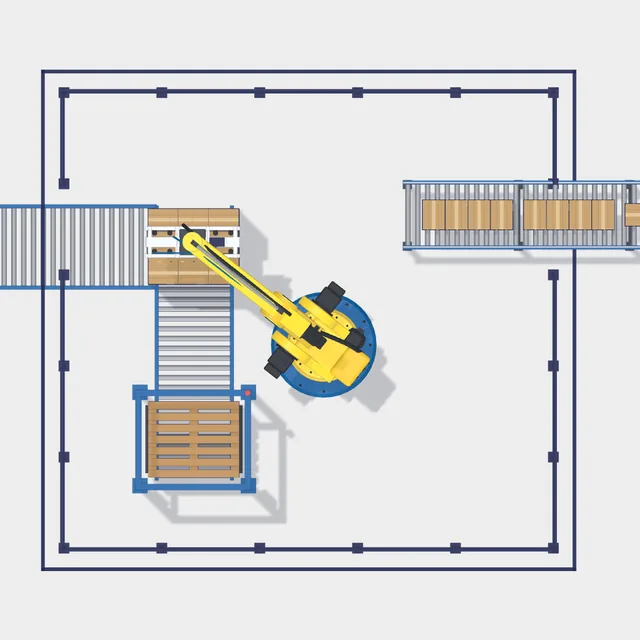
With the size and weight of your case or bag, your line speed and the space you have, we define which of the 3 versions fits you and how the layout sits in your plant, seen from above like this.
What data we need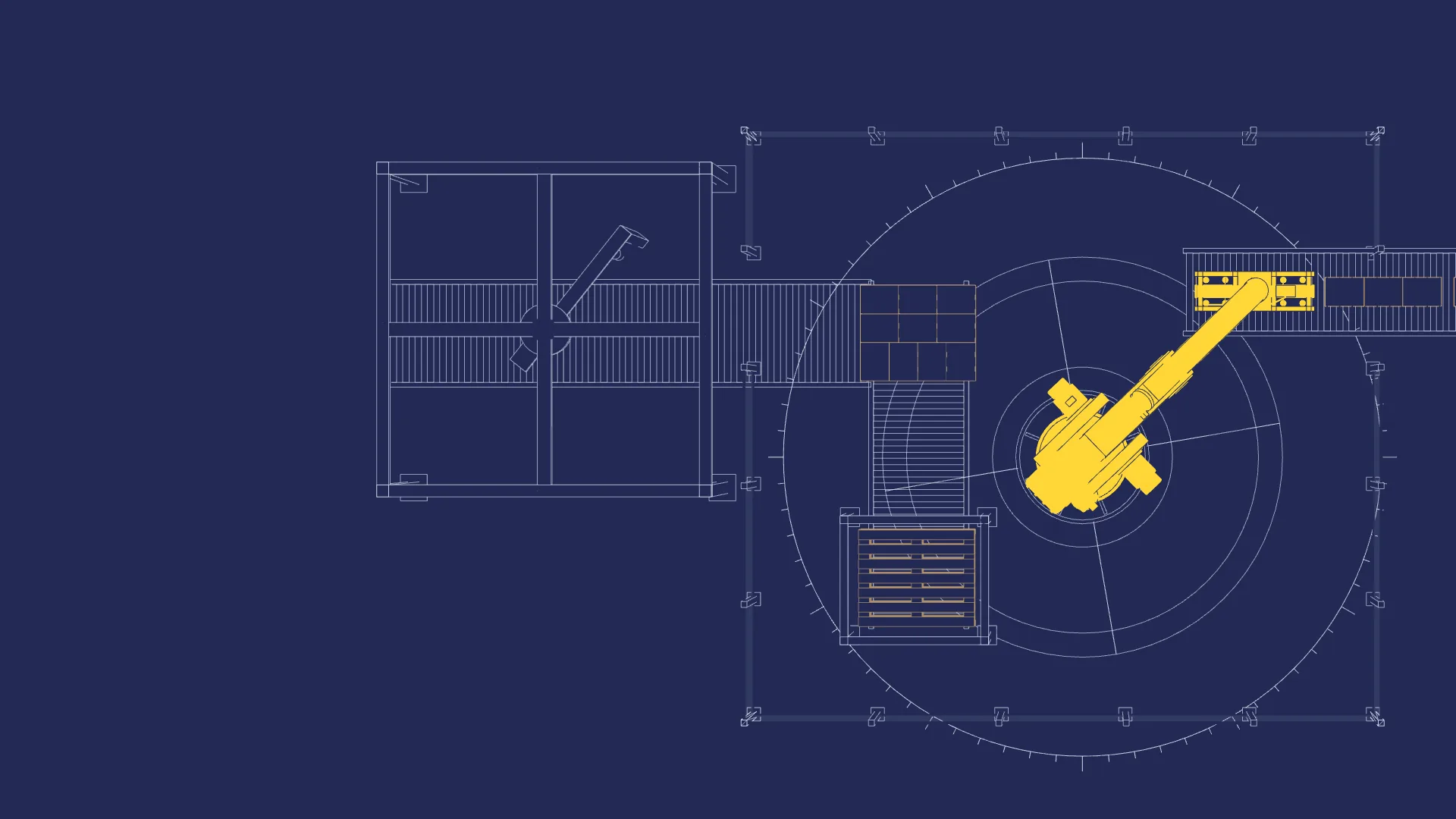
From drawing to your plant in 12 weeks.
Pays for itself in 23 to 31 months at 3 shifts with 2 people per shift. US$100,000 cell, labor only. Target Robotics calculation with assumptions, November 3, 2026.
With the size and weight of your case or bag, your line speed and the space you have, we define which of the 3 versions fits you and how the layout sits in your plant, seen from above like this.
What data we needFabrication happens at Camino a la Joyita #100: tool, conveyors, control panel and robot are assembled here. Because it is a replica machine, the lead time can be stated up front: 12 weeks.
On your floor we install, commission and start up. Target's team stays until the machine is running, and your people take the one-week course at the lab.
What the course includesIn systems already installed, Target has reached 60 cases per minute (Target presentation, 2026) and 70 tubs per minute (Target video, 2020). After the one-year warranty comes the 24/7 maintenance contract, with spare parts in Mexico.
How the contract worksFrom above you can see the whole thing: the case arrives, gets palletized and stretch wrapped, and an AGV or forklift takes it away. If your line needs any of those stations along with the palletizer, they go in the same project.
See the end of lineA US$100,000 cell pays back in 23 to 31 months with 2 people per shift, and in 11 to 16 with 4, counting labor only at Mexican wages (Target Robotics calculation with assumptions).
46 hours in 2027 and 40 in 2030, with no pay cut. Covering the same position on 3 shifts will take 20% more people.
Schedule: DOF, Mexico's official gazette, March 3, 2026. The 20% is a Target Robotics calculation with that schedule, for a stacking position with 2 people per shift and 144 hours a week.
What it means for your packaging line, year by year| Cell | 3 shifts, 4 per shift | 3 shifts, 2 per shift | 1 shift, 2 people |
|---|---|---|---|
| US$100,000 | 11 to 16 | 23 to 31 | 69 to 93 |
| US$120,000 | 14 to 19 | 27 to 37 | 82 to 112 |
| US$175,000 | 20 to 27 | 40 to 54 | 120 to 163 |
| US$250,000 | 29 to 39 | 57 to 78 | 171 to 233 |
Target Robotics builds a replica robotic palletizer in San Luis Potosí, in 3 versions, for plants in Mexico. It has worked with robots since 2001 (IMPI, the trademark office of Mexico, first use of the brand), sold its first palletizer in 2009 and delivers it in 12 weeks, with training included and a 24/7 maintenance contract in Spanish (Target leadership, November 2026).
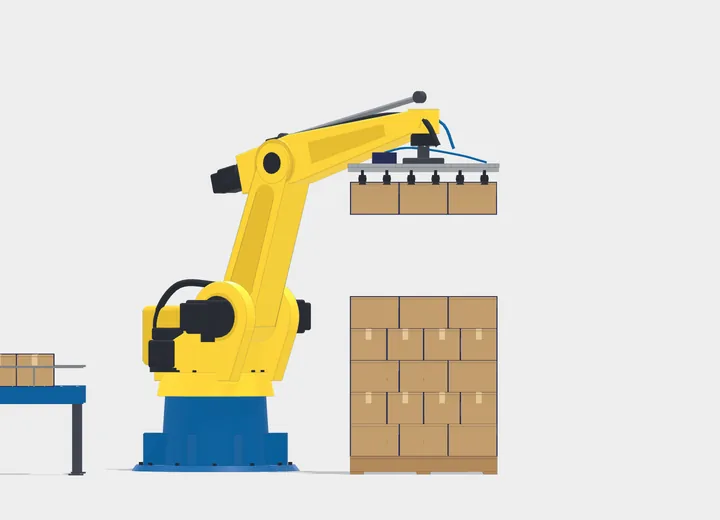
A palletizer is the machine that takes cases, bags or tubs at the end of the line and stacks them on a pallet, layer by layer, with no manual lifting. Target builds only this machine, in its 3 versions, and refers anything beyond palletizing to whoever does it every day.
| Version | For what line | Reference in installed systems |
|---|---|---|
| Low speed and load | Slow line and light cases. First automation of the stacking job | Cases from 3 kg |
| Medium speed and load | Medium speed, with cases or bags of medium weight | Up to 2 layers per minute, with a multitask tool |
| High speed and load | High speed, heavy load, several lines, 3 shifts | Up to 60 cases per minute, one system on 6 lines, cases up to 50 kg |
A large customer came to us with the spec already written: a 3D camera, one of the expensive ones. We could have sold it. We reviewed the process with the vendor and found that a camera five times cheaper did the same job, so we handed the customer the report.
That report took us extra work and lowered the value of the sale. We were up against integrators who had already quoted that camera without telling the customer any of this, and that conversation decided the purchase.
“I’m working more to earn less.”
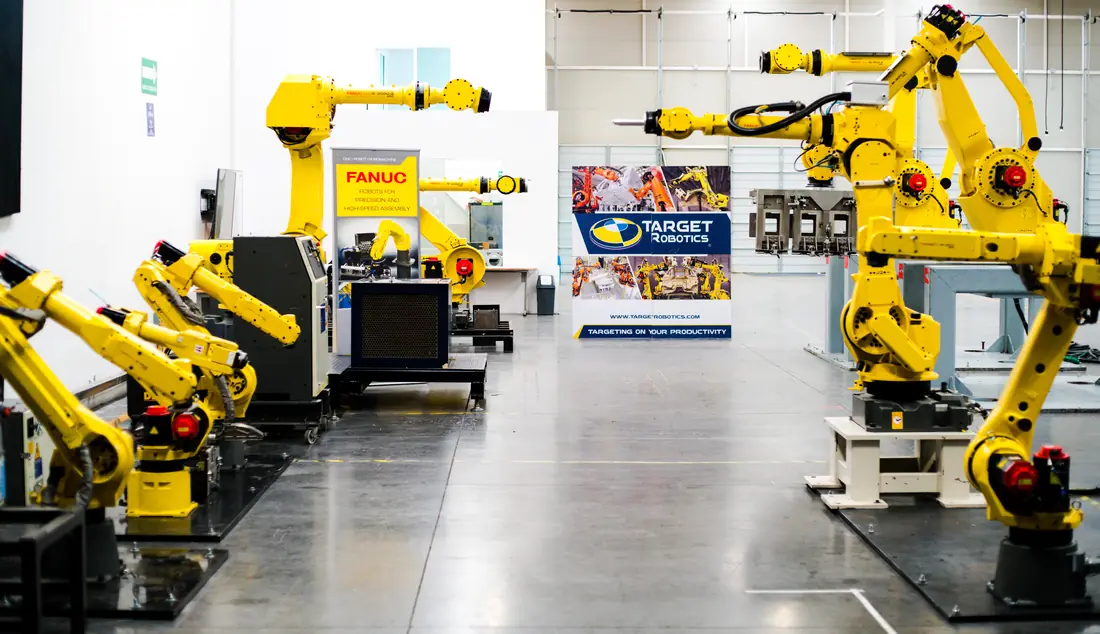
Every machine includes a one-week course at our lab, on our own robots. Groups of 6, so one instructor can keep an eye on each person. See the 7 courses.
Preventive and corrective service, training and spare parts, with more than US$100,000 in robot spare parts in Mexico (Target corporate presentation, 2026). At night, someone here answers the phone, in Spanish. How it works.
Support: +52 (444) 127 58 73
If you want to see a machine running, ask for it in your quote request: when possible, we arrange the visit with the customer.
Or call sales: +52 (444) 279 0953 · WhatsApp