

The math and the rules of palletizing in Mexico
Written for whoever has to take the case to their plant director. Every figure carries its source, and when a calculation is ours, the assumptions are in plain sight.
Cost and payback
-
Mexico 40-hour workweek in manufacturing: how many more people your packaging line needs from 2027 to 2030
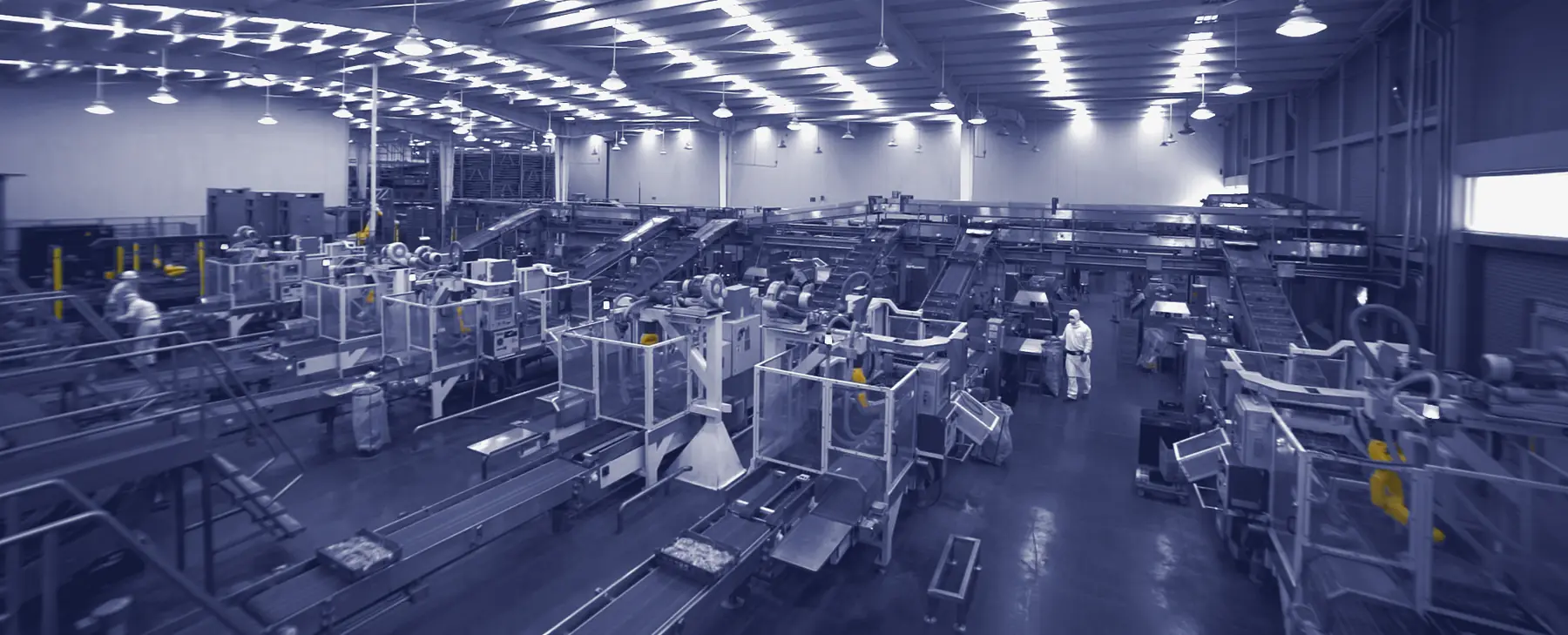
A line with 2 people per shift at 3 shifts goes from 6 to 7.2 people in 2030 to cover the same hours, 20% more and with no pay cuts (Target Robotics calculation with assumptions). The first step takes effect on January 1, 2027, at 46 hours (DOF, 2026).
-
Cost of manual palletizing in Mexico: the math per shift and per case on 2026 wages
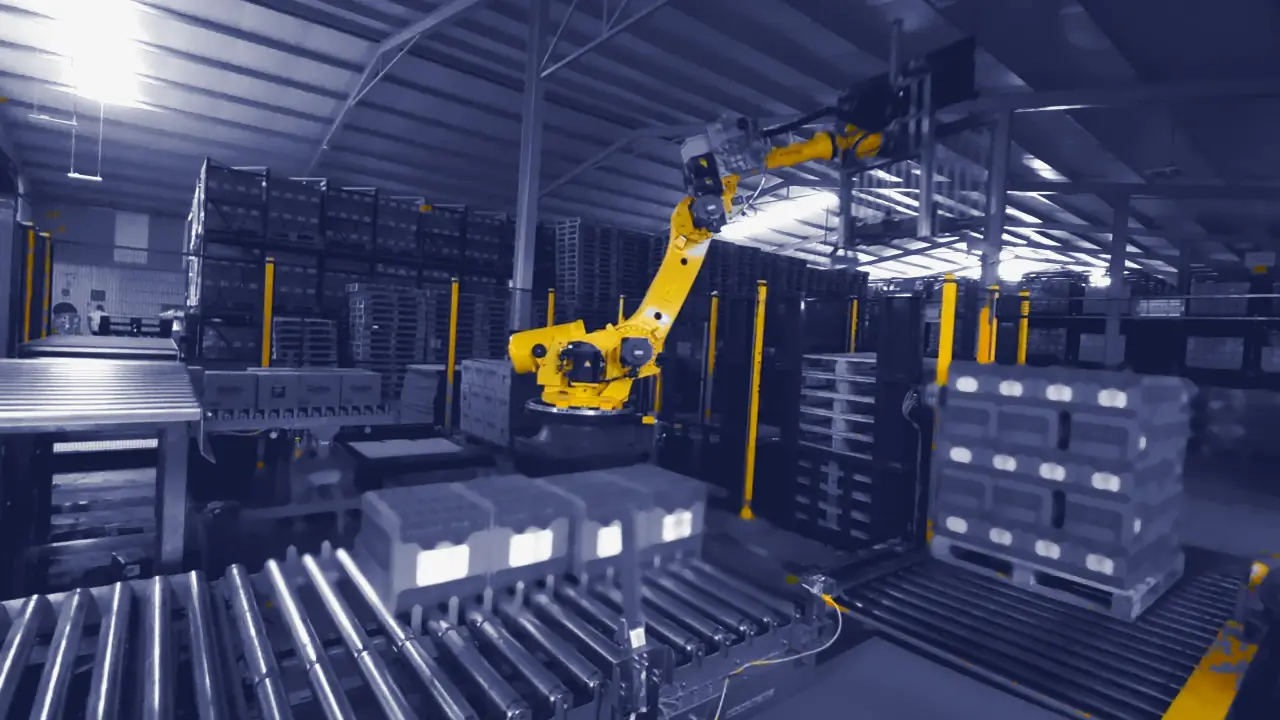
On 2026 wages, a person stacking pallets costs MXN 14,000 to MXN 19,000 a month, and a crew of 2 at 8 cases per minute comes to MXN 0.32 to MXN 0.43 per case, according to a Target Robotics calculation with assumptions. At 3 shifts with 2 people per shift, that is MXN 1,008,000 to MXN 1,368,000 a year.
-
How to pay for a robotic palletizer in Mexico: purchase, finance lease or operating lease
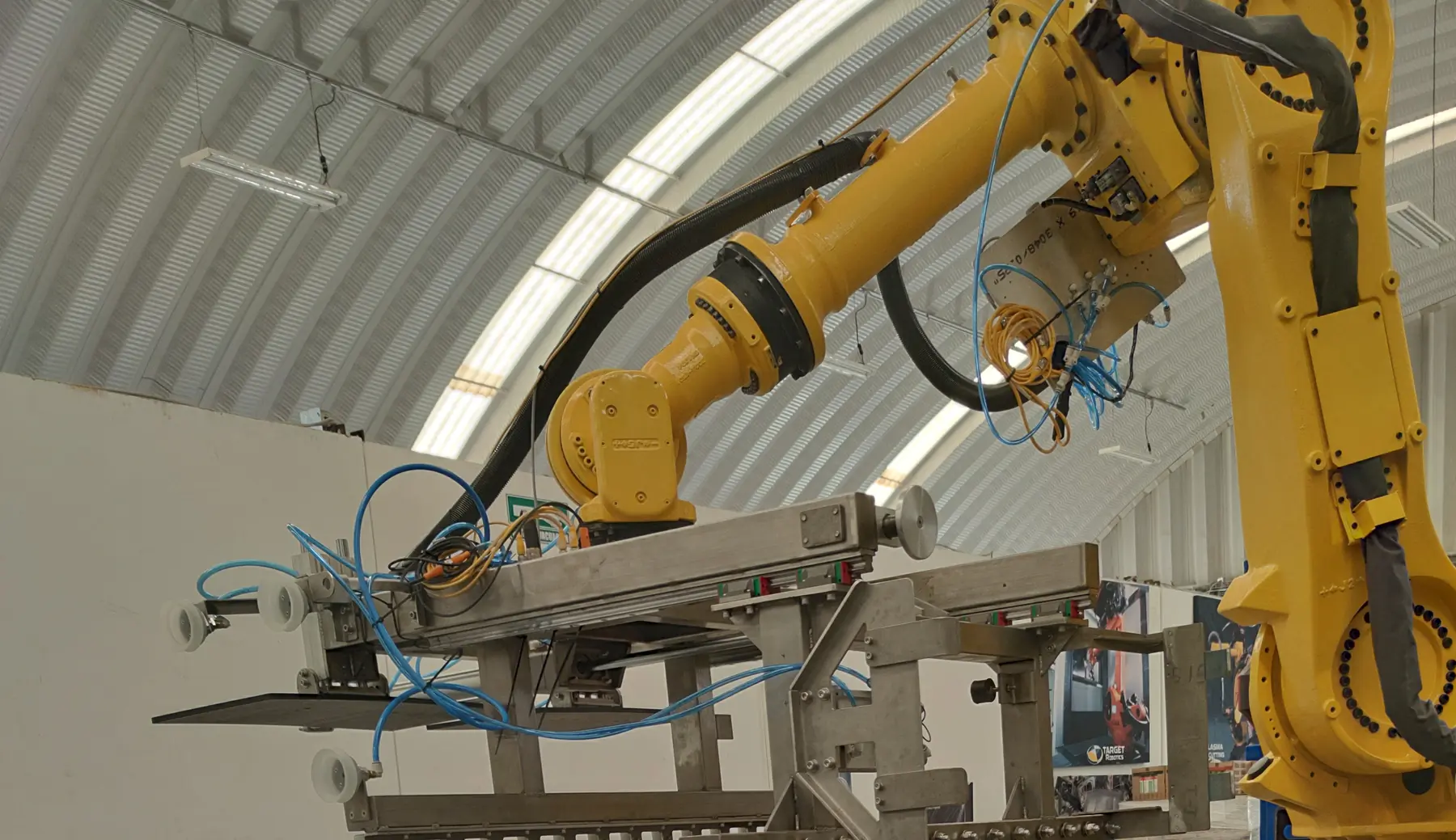
There are three routes: purchase, finance lease and operating lease. Target Robotics builds the palletizer; the loan or the lease is arranged separately, with a bank or a leasing company. BBVA publishes up to 84 months for industrial machinery, and no source reviewed on November 13, 2026 publishes its rate.
-
Plan México immediate deduction for machinery: what it is, who qualifies and what it is worth on a robotic palletizer
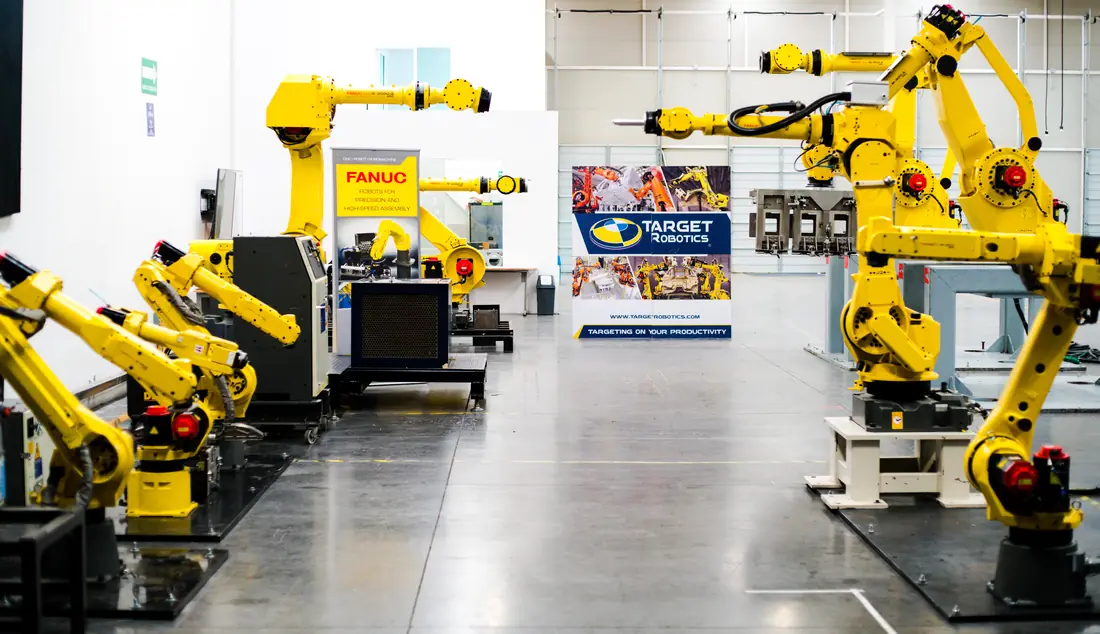
It lets you deduct in a single fiscal year 67% of the price if you buy in 2026 or 62% from 2027 to 2030, in food and beverage and with a certificate (DOF, 2025). It brings income tax (ISR) savings forward: 17.7% of the price in cash in the first year and about 2.8% in present value, according to a Target Robotics calculation with assumptions.
-
When a robotic palletizer pays off in Mexico: how many shifts and people it takes
It pays off from 3 shifts with 2 people per shift: a US$100,000 cell pays for itself in 23 to 31 months, and with 4 people per shift, in 11 to 16. On one shift with 2 people it takes 69 to 93 months and labor alone rarely justifies it (Target Robotics calculation with assumptions).
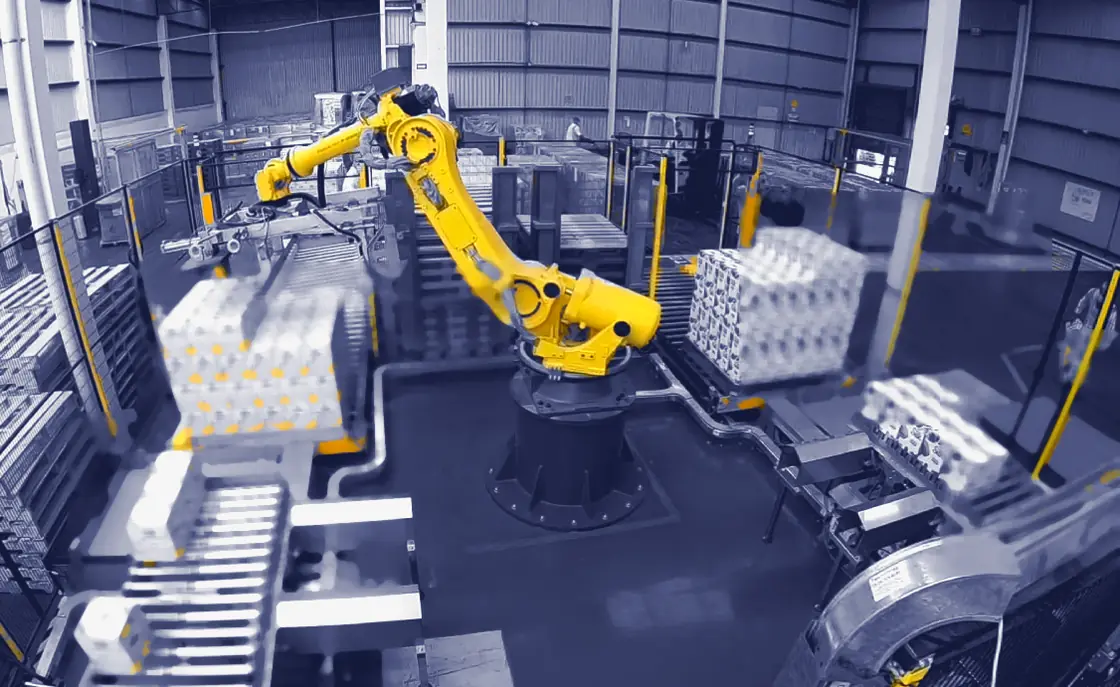
Pallets and stacking
-
How many boxes fit on a pallet measuring 1.00 x 1.20 m
On a 1.00 x 1.20 m pallet, 5 to 20 boxes fit per layer depending on their size, and 20 to 160 per pallet with 1.65 m of product. Dividing areas gives you a ceiling, and the layer pattern sets the number.
-
How to palletize boxes: column stack, interlocked or pinwheel and when to use each
It depends on what fails first. A column stack suits boxes that crush and an interlocked pattern suits loads that lean; if the box size does not divide the pallet well, use a mixed layer or pinwheel. Compression loss runs from 12 to 54% depending on the pattern (RIT, 2021).
-
How to stack 25 kg bags: layer pattern, height and NOM-036
Stack them interlocked: 5 per layer on a 1.00 x 1.20 m pallet if the bag measures up to 60 x 40 cm, turning the layer on each level and flush with the edge. By hand, 25 kg is the NOM-036 limit for men aged 18 to 45; for women of that age the limit is 20 kg.
-
Palletizing vs stacking vs pelletizing: the Spanish terms on a Mexican plant floor
Estibar means stacking in order, on the floor or on any base. Paletizar means stacking on a pallet, a tarima in Mexico, to move the load as one unit. Peletizar belongs to another process: pressing material into pellets.
Comparisons
-
Cobot palletizer cost in Mexico: published ranges, payload and cycle rates
Public guides put it between US$50,000 and US$160,000, and Robotiq publishes from US$85,000 in the Americas. On Mexican wages and with 2 people per shift, a US$85,000 cell takes 19 to 26 months to pay for itself at 3 shifts and 58 to 79 months on one shift (Target Robotics calculation with assumptions).
-
How many lines can one palletizing robot serve, and how to run the numbers
Published figures run from one to five lines per robot: Currie talks about two to five on average (2016) and other manufacturers publish up to three or four. The number for your plant comes from adding up the picks per minute of all the lines and comparing them with the speed the robot sustains in that cell.
-
How to compare palletizer quotes: scope, lead time, FAT, safety, training and maintenance contract
A quote should separate scope, speed, safety, installation, FAT and SAT testing, lead time, training, warranty and maintenance contract, and state what stays with your plant. Quotes can only be compared if they came from the same data: product, speed, stacking pattern, pallet and layout.
-
Robotic palletizer companies in Mexico: a directory of what each one publishes
Ten companies with a presence in Mexico offer robotic palletizing in this review: AXTON, CAV Robotics, CSi palletising, Dispac, HM Healy, Hybernya, Premier Tech, RAISA, Target Robotics and Toyota Automated Logistics. The table summarizes what each one was publishing on November 3, 2026.
-
Is a used robotic palletizer worth it? Hours, spare parts and refurbishing
It can make sense if the seller provides hours, maintenance log and warranty in writing, and if arm and controller come together. Before deciding, add up what the arm does not bring: gripper, safety, program and installation.
Operations and support
-
FANUC M-410 palletizing robot: the models in the series and the alternatives
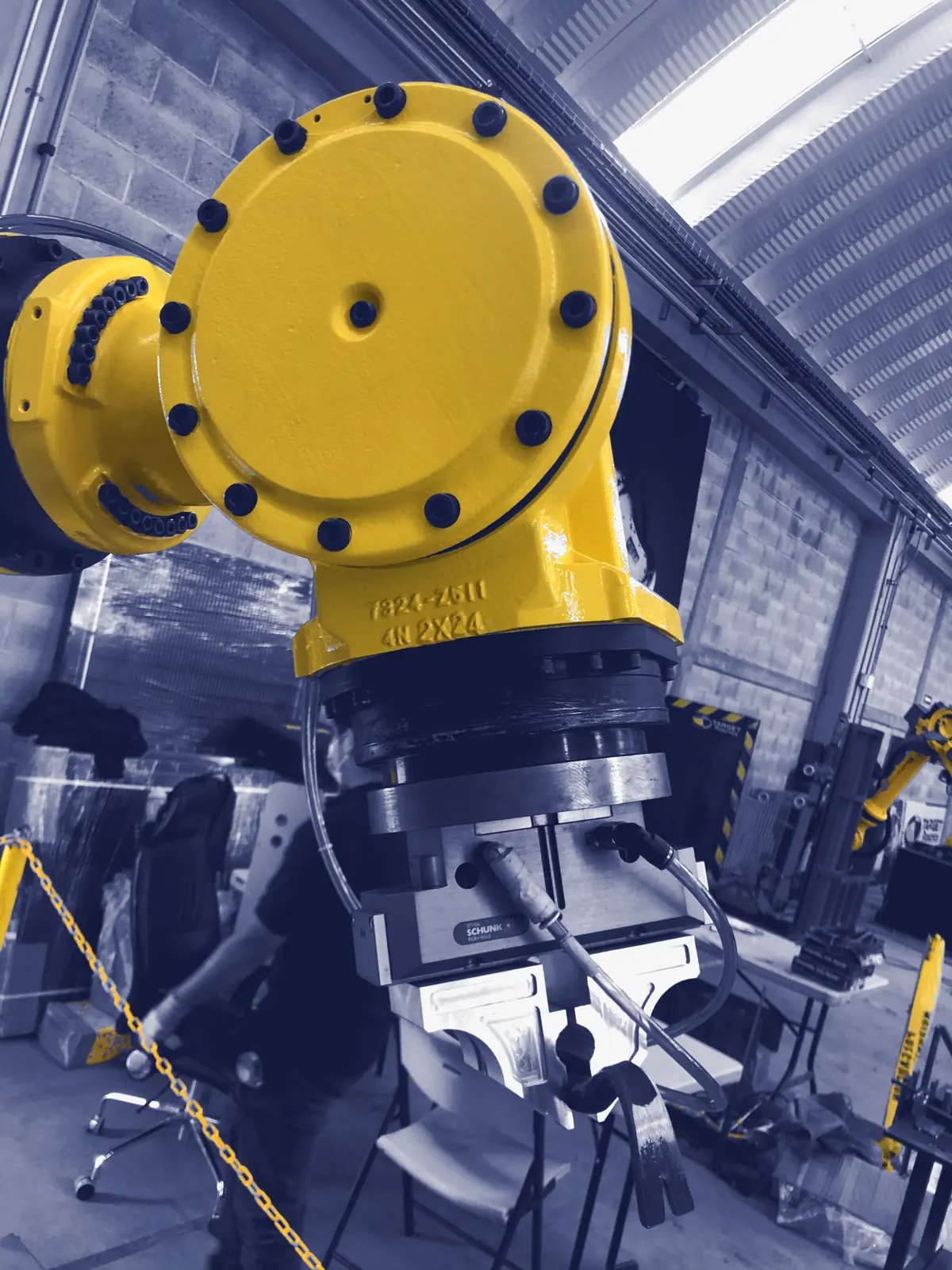
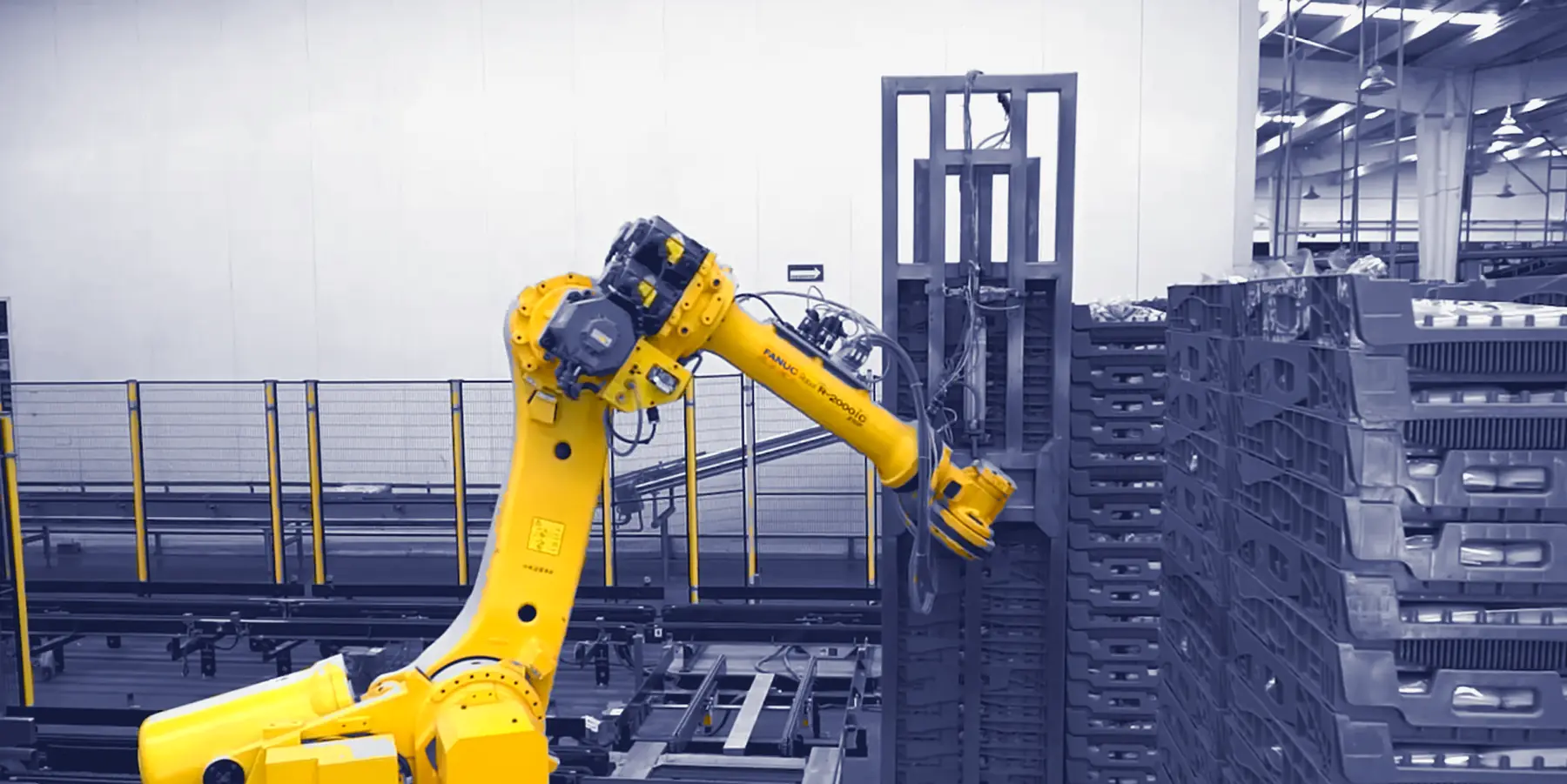
FANUC dedicates the M-410 series to palletizing: 110 to 800 kg at the wrist and up to 3,203 mm of reach (FANUC catalog, November 2025). The model comes from adding up gripper and product, and from comparing that number with the cycles per hour your line calls for.
-
FANUC robot preventive maintenance: what it includes, how often, and what to do when the cell stops overnight
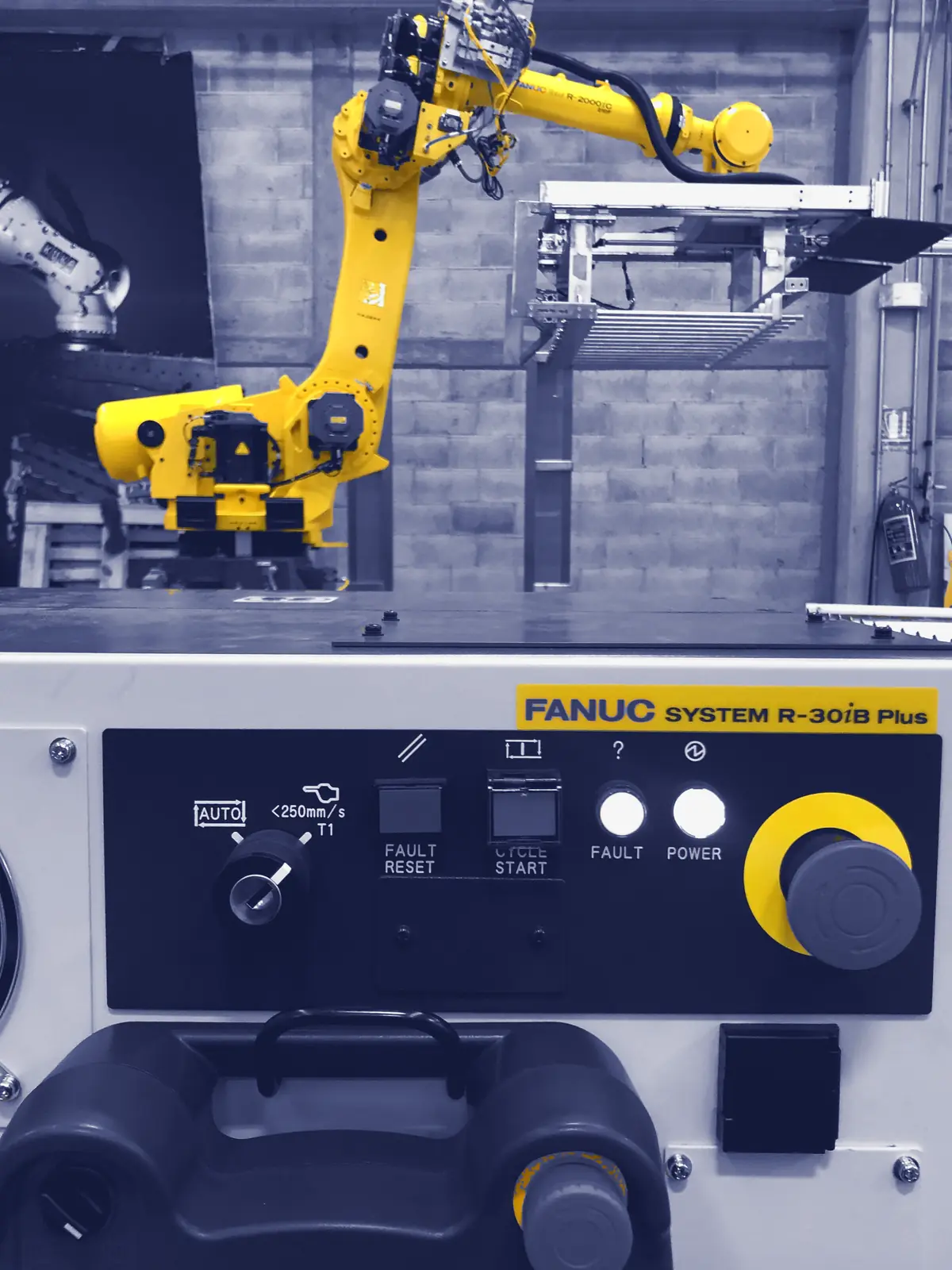
FANUC's manual for the M-410iB/140H (2017) calls for inspections at 960 and 3,840 hours, batteries at 5,760 hours and grease at 11,520 hours, whichever comes first between hours and calendar. That table assumes 3,840 hours of use per year: at 3 shifts, the intervals shrink by almost half.
-
FANUC training cost in Mexico and what a course should include
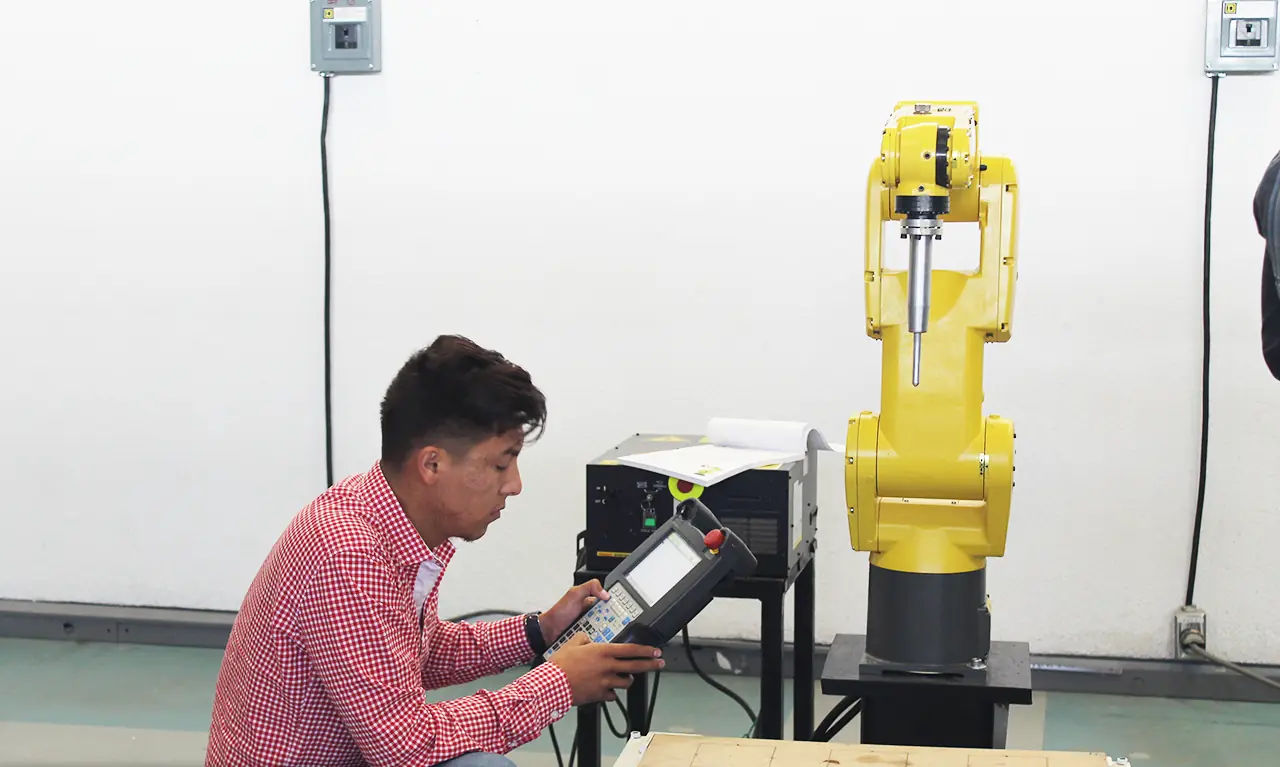
The only price we found published in Mexico is from RoboTraining: 16 hours over 4 days, MXN 5,000 to MXN 9,750 depending on the attendee profile (November 13, 2026). FANUC publishes courses, hours and dates, with no price. Target Academy quotes by course and by group size.
-
How to stretch wrap a pallet: step by step, grams of film and cost per pallet
Anchor the film to the pallet, apply 2 to 3 wraps at the base, work up with about 50% overlap (Lantech, 2025) and reinforce the top layer. Then weigh the roll: that number tells you how much you spend per pallet.
Send your load, speed and shifts. We reply with a version and a price range.
Or call sales: +52 (444) 279 0953 · WhatsApp